
explore.loading_image
Bibi Ka Makbara
Aurangabad, Maharashtraexplore.built_in_year
Historical Monuments
explore.cta_plan_trip_blurb
explore.cta_plan_tripexplore.cta_review_blurb
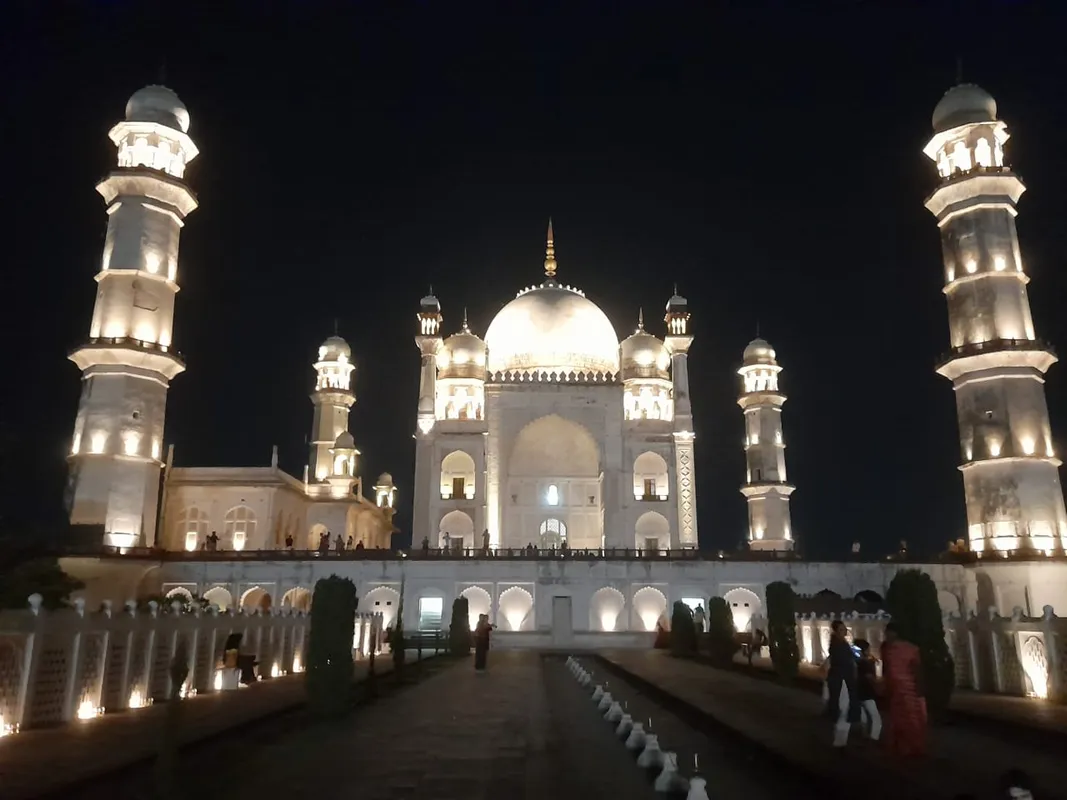
Bibi Ka Maqbara is the tomb of Dilras Banu Begum, the first wife of Emperor Aurangzeb. It is built of white marble and is modelled on the Taj Mahal with its central dome and minarets, although it is of a much smaller scale. Bibi Ka Maqbara comes across as very intimate, pristine, and delicate.
There are only a few monuments credited to Aurangzeb - the small, but elegant, Moti Masjid in Red Fort, Delhi, the Badshahi Mosque in Lahore, and Bibi Ka Maqbara being the best known ones.
Bibi Ka Maqbara is believed to have been built between 1651 and 1661 CE. The mausoleum stands in the middle of a large sprawling garden laid out in the lavish style of the best of Mughal Gardens, with paved walkways, fountains, and rotaries. The red-brick walkways have intricate white tiled patterns. The mausoleum is built on a high square platform of polished red poryphiritic stone provided with a railing in trellis work at its edge. It was originally approached by a flight of stairs from all sides. A mosque along the western side of the platform, which is a later-day addition attributed to the Nizam of Hyderabad, has now blocked the access from that side. Four tapering, octagonal, free-standing minarets with domed pavilions at the top stand at the corners of the platform. A number of rooms with arched domes in diamond cut design are made beneath the platform from all sides. The walls and roof of these rooms are decorated with floral designs.
The mausoleum has lofty pointed arches on all sides. The lower part of the mausoleum along with its dome are made with white marble, while the inside portion is of basaltic trap plasterd by a fine coat of lime, rendered with a marble finish and adorned with stucco work. The main entrance is on the south and it leads to an octagonal gallery with a low barricaded marble screen running around the interior enabling a top-down view of the grave at the lower level. The interior portion of the mausoleum is decorated with beautiful carvings. There are windows of marble at the corner angles.
A flight of steps descend into the basement of the mausoleum from the southern side which provides access to the grave, which is encloesd by a delicately carved octagonal screen.
Four smaller chhatris with corresponding minarets to each are also seen at the corners of the large dome on the roof.
The mosque, a latter day addition by the Nizam of Hyderabad, disturbs the symmetry of the structure, but even then it complements the beauty of the mausoleum with its fine arches and slender columns.
The eastern pavillion is located in the center of the eastern enclosure wall. The rectangular shaped pavillion is a double-storeyed structure. It is built on a raised platform provided with a red basalt lattice railing at the edge from three sides of the platform. It is entered through five arched doorways on the west. It has a flat roof and the interior is plastered with a fine coat of lime. The interior has rows of polygonal pillars with corner pilasters interconnected with each other by a seeries of cusped arches. The walls, pillars, and ceiling of the pavilion are decorated with geometrical designs and other floral patterns painted in multi-colours like gold, maroon, green, and yellow. The richly decorated southern pavilion serves as the entrance to the enclosure.
There are only a few monuments credited to Aurangzeb - the small, but elegant, Moti Masjid in Red Fort, Delhi, the Badshahi Mosque in Lahore, and Bibi Ka Maqbara being the best known ones.
Bibi Ka Maqbara is believed to have been built between 1651 and 1661 CE. The mausoleum stands in the middle of a large sprawling garden laid out in the lavish style of the best of Mughal Gardens, with paved walkways, fountains, and rotaries. The red-brick walkways have intricate white tiled patterns. The mausoleum is built on a high square platform of polished red poryphiritic stone provided with a railing in trellis work at its edge. It was originally approached by a flight of stairs from all sides. A mosque along the western side of the platform, which is a later-day addition attributed to the Nizam of Hyderabad, has now blocked the access from that side. Four tapering, octagonal, free-standing minarets with domed pavilions at the top stand at the corners of the platform. A number of rooms with arched domes in diamond cut design are made beneath the platform from all sides. The walls and roof of these rooms are decorated with floral designs.
The mausoleum has lofty pointed arches on all sides. The lower part of the mausoleum along with its dome are made with white marble, while the inside portion is of basaltic trap plasterd by a fine coat of lime, rendered with a marble finish and adorned with stucco work. The main entrance is on the south and it leads to an octagonal gallery with a low barricaded marble screen running around the interior enabling a top-down view of the grave at the lower level. The interior portion of the mausoleum is decorated with beautiful carvings. There are windows of marble at the corner angles.
A flight of steps descend into the basement of the mausoleum from the southern side which provides access to the grave, which is encloesd by a delicately carved octagonal screen.
Four smaller chhatris with corresponding minarets to each are also seen at the corners of the large dome on the roof.
The mosque, a latter day addition by the Nizam of Hyderabad, disturbs the symmetry of the structure, but even then it complements the beauty of the mausoleum with its fine arches and slender columns.
The eastern pavillion is located in the center of the eastern enclosure wall. The rectangular shaped pavillion is a double-storeyed structure. It is built on a raised platform provided with a red basalt lattice railing at the edge from three sides of the platform. It is entered through five arched doorways on the west. It has a flat roof and the interior is plastered with a fine coat of lime. The interior has rows of polygonal pillars with corner pilasters interconnected with each other by a seeries of cusped arches. The walls, pillars, and ceiling of the pavilion are decorated with geometrical designs and other floral patterns painted in multi-colours like gold, maroon, green, and yellow. The richly decorated southern pavilion serves as the entrance to the enclosure.
explore.label_height: 21.95 explore.label_meters