explore.loading_image
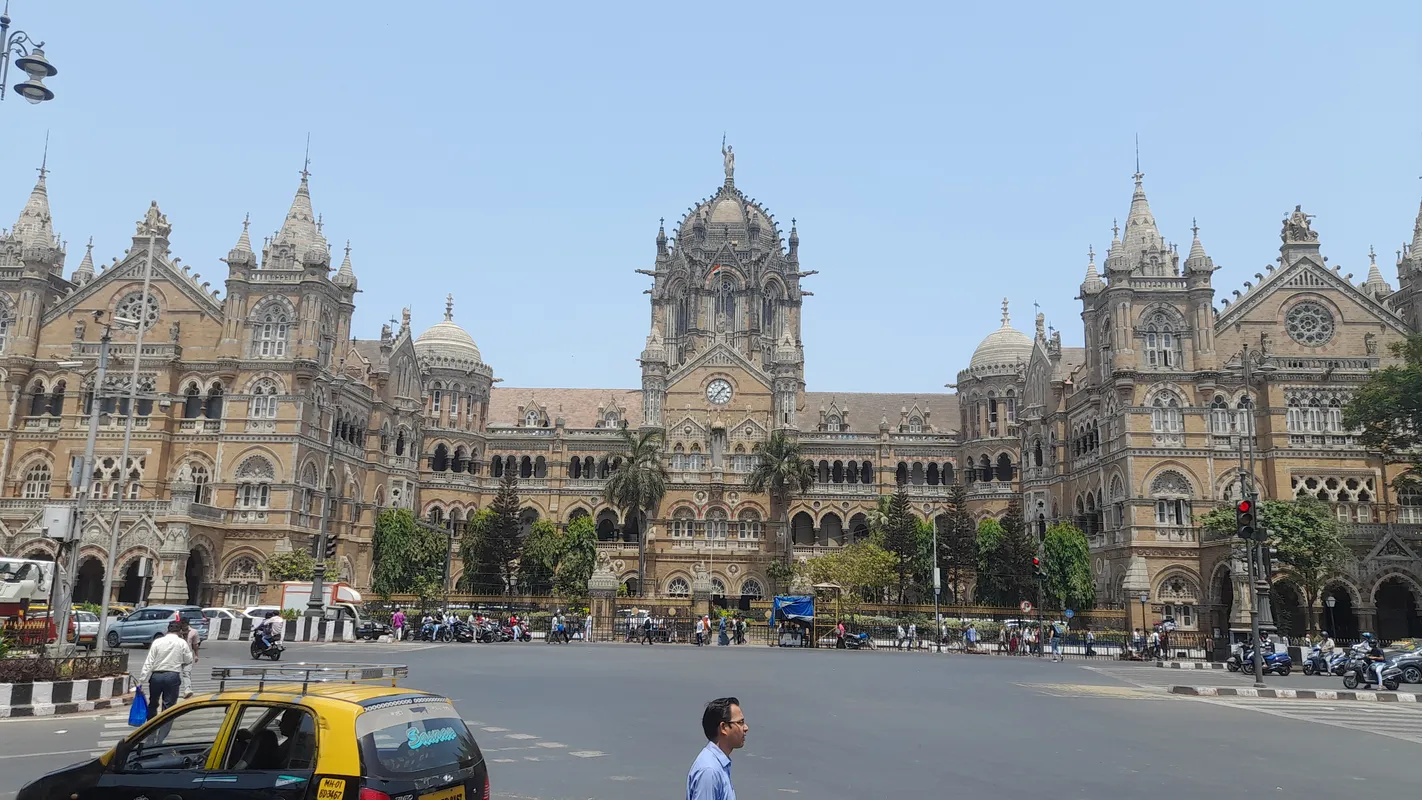
Chatrapati Shivaji (Victoria) Terminus
Mumbai, Maharashtraexplore.built_in_year
Historical Monumentsexplore.unesco_whs
explore.cta_plan_trip_blurb
explore.cta_plan_tripexplore.cta_review_blurb
The building that serves as the headquarters of the Central Railway was originally built as the headquarters of the Great Indian Peninsular Railway. The GIPR logo can still be seen on the walls of the booking hall, along with the coat of arms for GIPL. The coat of arms depicts an elephant on the top-left, a steam engine on the top right, the cross of St. George on the bottom right, and the Coat of Arms of the United Kingdom on the bottom left. The railway building was completed in 1887, the Golden Jubilee of Queen Victoria, and was named Victoria Terminus to commemorate the occasion.
It's basic plan is symmetrical on an east–west axis, with a long central wing flanked by projections on the north and south, forming a C-shaped structure. The long central wing is crowned by a high central octagonal ribbed dome topped by a 1.5 foot tall female figure symbolising Progress. This statue holds a torch pointing upwards in her right hand and a spoked wheel in her left hand. There are statues representing Commerce, Agriculture, Engineering and Science standing atop the ridge on the northern and southern fronts, as well as the ridge on the projecting sections on the north and south.
The wings have turrets at each of their four corners complementing the central dome. The main facade of CST features four Oriel windows (they project from the main wall of the building but do not reach the ground). The side wings enclose a courtyard, which opens on to the street on the west.
The outer walls of the long corridor running just inside the west-facing facade feature the bas-relief busts of ten directors of the old Great Indian Peninsula Railway Company including Dufferin, Dalhousie, Jaggannath Shankarseth, Sir Jamsetjee Jeejeebhoy, and Colonel Holland.
The entrance gates are flanked by figures of a lion (representing Great Britain) and a tiger (representing India).
The ornamentation is in the form of statuary, bas-relief, and friezes. A mix of Italian gothic style, 3D-stone carvings of local species of animals, flora and fauna, symbols, arched tympana, portrait roundels of human faces, and stone mesh works on the windows, are other decorative elements that can be seen. It has carvings made in local yellow malad stones blended with Italian marble and polished granite. The architectural detailing is achieved through white limestone. The doors and windows are made of Burma teak wood with some steel windows mounted in the drum of the octagonal ribbed masonry dome. The external embellishments include gargoyles and allegorical grotesques carrying standards and battle-axes.
The ground floor of the North Wing is still used as the booking office. It has eight tall columns in the hallway rising to ribbed arches which support the vaulted roof above. The bases of these columns are decorated with heads of dogs, lions, rams, and cats. The pillars are made of Italian marble and polished Indian blue stone. The stone arches are covered with carved foliage. The ceiling of the booking hall was originally painted blue, gold and strong red on a ground of rich blue with gold stars. Its walls were once lined with glazed tiles.
The porch outside the ticketing hall on the north features leopards and lemurs climbing down the walls.
Intricately carved concentric pointed arches, are seen throughout the terminal's interior. These are particularly visible along the walls of the central chamber, which features a sweeping staircase with a wrought iron railing cantilevered from the walls, rising to the offices on the top. A sculpted lion bearing a shield with the coat of arms of the Great Indian Peninsular Railway stands at the foot of the staircase. The staircase skirts along the walls of the open well leading all the way up to the dome. Gothic style arches open on to corridors leading to the office spaces beyond on each of the three levels. There are elaborate, Gothic style, windows, as well as smaller rose windows on top of single and double openings with pointed arches, which all provide lighting to the interior of the building. At a lower level, ornate lattice (jaali) windows carved in stone allow ventilation and light.
The majestic central dome has a span of approx. 40 ft. and is punctuated by eight prominent ribs rising from each corner of the octagonal drum. The drum of the dome has eight sets of stained glass windows. The stained glass windows have details such as an elephant with a ruby glass howdah and a steam engine - symbols of GIPR's coat of arms. A shield surrounded by a medallion with the motto of the GIPR - Arte non ense (by art (skill), not by the sword).
There were originally 4 rail tracks. Today, there are eighteen platforms for trains terminating at the station - 7 suburban, and 11 long-distance.
The station's name was officially changed from Victoria Terminus to Chhatrapati Shivaji Terminus, in 1996.
It's basic plan is symmetrical on an east–west axis, with a long central wing flanked by projections on the north and south, forming a C-shaped structure. The long central wing is crowned by a high central octagonal ribbed dome topped by a 1.5 foot tall female figure symbolising Progress. This statue holds a torch pointing upwards in her right hand and a spoked wheel in her left hand. There are statues representing Commerce, Agriculture, Engineering and Science standing atop the ridge on the northern and southern fronts, as well as the ridge on the projecting sections on the north and south.
The wings have turrets at each of their four corners complementing the central dome. The main facade of CST features four Oriel windows (they project from the main wall of the building but do not reach the ground). The side wings enclose a courtyard, which opens on to the street on the west.
The outer walls of the long corridor running just inside the west-facing facade feature the bas-relief busts of ten directors of the old Great Indian Peninsula Railway Company including Dufferin, Dalhousie, Jaggannath Shankarseth, Sir Jamsetjee Jeejeebhoy, and Colonel Holland.
The entrance gates are flanked by figures of a lion (representing Great Britain) and a tiger (representing India).
The ornamentation is in the form of statuary, bas-relief, and friezes. A mix of Italian gothic style, 3D-stone carvings of local species of animals, flora and fauna, symbols, arched tympana, portrait roundels of human faces, and stone mesh works on the windows, are other decorative elements that can be seen. It has carvings made in local yellow malad stones blended with Italian marble and polished granite. The architectural detailing is achieved through white limestone. The doors and windows are made of Burma teak wood with some steel windows mounted in the drum of the octagonal ribbed masonry dome. The external embellishments include gargoyles and allegorical grotesques carrying standards and battle-axes.
The ground floor of the North Wing is still used as the booking office. It has eight tall columns in the hallway rising to ribbed arches which support the vaulted roof above. The bases of these columns are decorated with heads of dogs, lions, rams, and cats. The pillars are made of Italian marble and polished Indian blue stone. The stone arches are covered with carved foliage. The ceiling of the booking hall was originally painted blue, gold and strong red on a ground of rich blue with gold stars. Its walls were once lined with glazed tiles.
The porch outside the ticketing hall on the north features leopards and lemurs climbing down the walls.
Intricately carved concentric pointed arches, are seen throughout the terminal's interior. These are particularly visible along the walls of the central chamber, which features a sweeping staircase with a wrought iron railing cantilevered from the walls, rising to the offices on the top. A sculpted lion bearing a shield with the coat of arms of the Great Indian Peninsular Railway stands at the foot of the staircase. The staircase skirts along the walls of the open well leading all the way up to the dome. Gothic style arches open on to corridors leading to the office spaces beyond on each of the three levels. There are elaborate, Gothic style, windows, as well as smaller rose windows on top of single and double openings with pointed arches, which all provide lighting to the interior of the building. At a lower level, ornate lattice (jaali) windows carved in stone allow ventilation and light.
The majestic central dome has a span of approx. 40 ft. and is punctuated by eight prominent ribs rising from each corner of the octagonal drum. The drum of the dome has eight sets of stained glass windows. The stained glass windows have details such as an elephant with a ruby glass howdah and a steam engine - symbols of GIPR's coat of arms. A shield surrounded by a medallion with the motto of the GIPR - Arte non ense (by art (skill), not by the sword).
There were originally 4 rail tracks. Today, there are eighteen platforms for trains terminating at the station - 7 suburban, and 11 long-distance.
The station's name was officially changed from Victoria Terminus to Chhatrapati Shivaji Terminus, in 1996.
explore.label_base: 100 × 72 explore.label_meters
explore.label_height: 100 explore.label_meters