
explore.cta_plan_trip_blurb
explore.cta_plan_tripexplore.cta_review_blurb
The Shankaracharya temple is a beautiful Shiva temple dedicated to Shiva in his Yeshtheswara form. It is situated on a picturesque location on the Gopadari Hill on the South East of Srinagar, a part of the Zabarwan mountains which circle the city. This temple is situated at a height of 1100 feet above the Srinagar city. The temple (and the hill) are named after Shankaracharya, the apostle of the Advaita philosophy (monoism) who is said to have visited the spot during his travels across India.
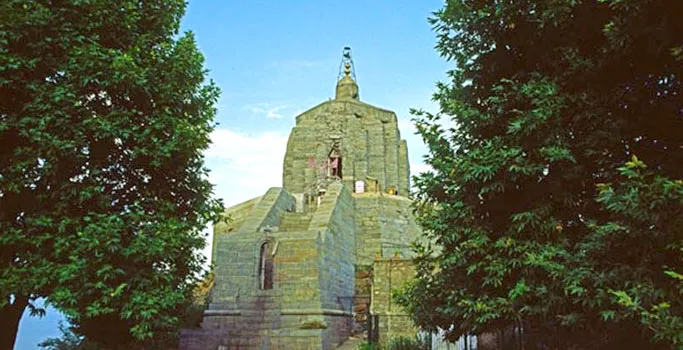
The temple structure is relatively small compared to the height of its base. It stands on an elevated octagonal platform cut directly from the rock. The platform rises approximately twenty feet above the surrounding courtyard and is accessed by another short, steep flight of stone steps. The stonework throughout is heavy, ancient, and weathered, with visible joints between large masonry blocks.
The main shrine is built entirely from grey-brown limestone. Its plan is compact and nearly square at the base, transitioning upward into a tall, slightly tapering pyramidal roof with smooth stone sides. At the summit of the roof sits a metal finial or kalasha. The exterior walls are mostly plain, with minimal ornamentation compared to many North Indian temples. Narrow vertical recesses and shallow carved bands break the wall surfaces at intervals.
The entrance faces south and consists of a small rectangular doorway framed by thick stone jambs. The doorway is comparatively low and recessed into the wall. A short set of steps leads directly into the sanctum. Around the base of the shrine runs a narrow circumambulatory path edged by low stone parapets.
The temple consists of a circular sanctum with a shiv-linga installed inside. The ceiling is dome shaped and is built of horizontal courses of kanjur stone. The outer surface is square with two projecting facets on each side. The shrine is built on a high octagonal plinth approached by a long flight of steps flanked by two side walls. The plinth is surmounted by a parapet wall, the inner face of which is adorned by a range of arcuate recesses enclosed in rectangular panels.
The temple can be dated back to the sixth or seventh century CE based on the style of its construction.
There also exists a cell at a lower level to the north, and a tank to the south east.
The octagonal high plinth and the stairs leading to it are dated earlier and may well have been part of the building traditionally ascribed to King Goaditya.
The temple as it is today has undergone many repairs throughout its life. The earliest repairs can be traced back to the rule of Lalitaditya Muktapida in the 8th century CE. Repairs were also undertaken by Zain-ul-Abideen in the 15th century after the temple got damaged in an earthquake. Repairs were also carried out during the Governorship of Sheikh Mohi-ud-Din in the 19th century. Maharaja Gulab Singh, a 19th century Dogra ruler, is credited for the stone steps that form a part of the passage to the shrine.
The flight of steps flanked by the two walls had two persian inscriptions originally - one of which mentions the date 1659 CE (AH 1069). The ceiling and the column appear to have been erected by Emperor Shahjahan in 1644 CE (AH 1054) going by the inscription found on the column.
Electrification of the temple was done in 1925.