Airavateswara Temple
Dharasuram, Tamil Nadu
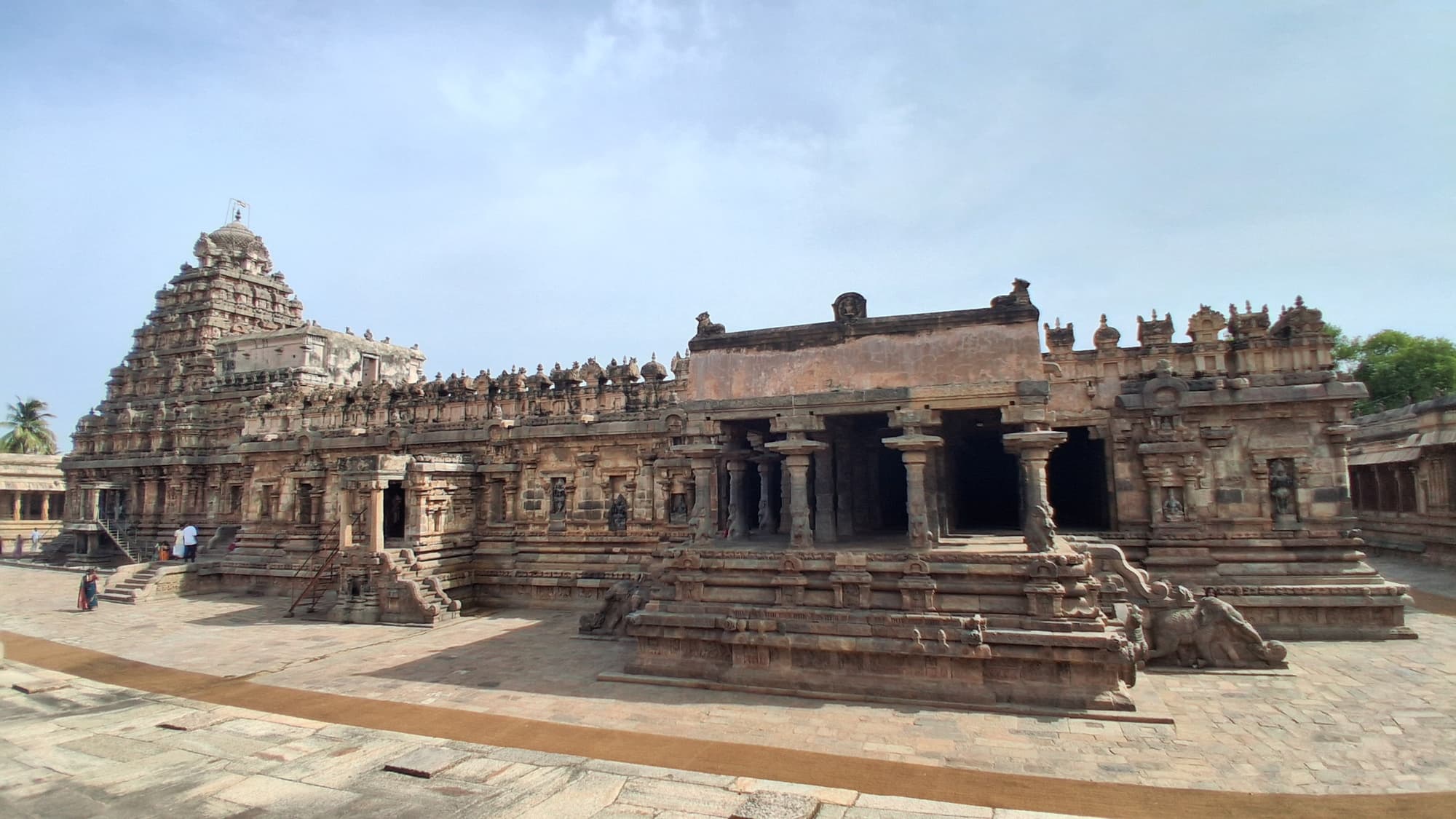
Place of Worship<p>The Airavatesvara temple at Dharasuram was built by the Chola king Rajaraja II (1143-1173 CE.): it is much smaller in size as compared to the Brihadisvara temple at Tanjavur and Gangaikondacholapuram. What the temple lacks in scale, it more than makes up in its highly ornate execution. The temple complex itself has been entirely built at the same time with no later additional structures, unlike the Brihadeeswara temples which have both seen the construction of additional shrines at a later date. The temple consists of a sanctum without a circumambulatory path and axial mandapas.</p><p>The east-facing temple stands in an open court, which has a double-storeyed cloister with just a single entrance in the east. There was an outer enclosure but it has not survived, except for the ruined remains of an outer <em>gopuram</em> (gateway tower). There is a Nandimandapa, and a Balipitha or platform for offerings. The main temple consists of a vimana, ardhamandapa, a transept (with stepped doorways on the north and south), and a closed mahamandapa. The outer walls of the temple are covered with elegant sculptures drawn from various mythological themes and include Naga-Nagini, Ardhanareeswara, Ashta-dikpalakas (guartians of the eight dimensions), Lakshmi, and Ganesha among others . The sculptures from this temple epitomize the finesse of Chola art.</p><p>The front mandapa is known in inscriptions as Rajagambhiran Tirumandapam. This mandapam is unique as it was conceptualized as a chariot with wheels. The pillars of this mandapa are highly ornate, several of which feature miniature shrines, complete with yali, makara torana, lintels, and a presiding deity. Other pillars have floral and geometric patterns, yali figures, lion bases, and other divine figures carved into them. The mandapam also features a ceiling with geometric patterns and figures of dancers in various poses.</p><p>A Chandikeswara shrine with a typical Dravida vimana stands towards the north of the main shrine, just as is the case with the Brihadeewsara temples of Tanjavur and Gangaikondacholapuram.</p><p>The labelled miniature friezes extolling the events that happened to the 63 nayanmars (Saiva saints) are noteworthy and reflect the deep roots of Saivism in this region. <br><br>The construction of a separate temple on the north for Devi (Divine consort), within its own enclosure wall, slightly later than the main temple, indicates the emergence of the Amman shrine as an essential component of the South Indian temple complex.</p>