
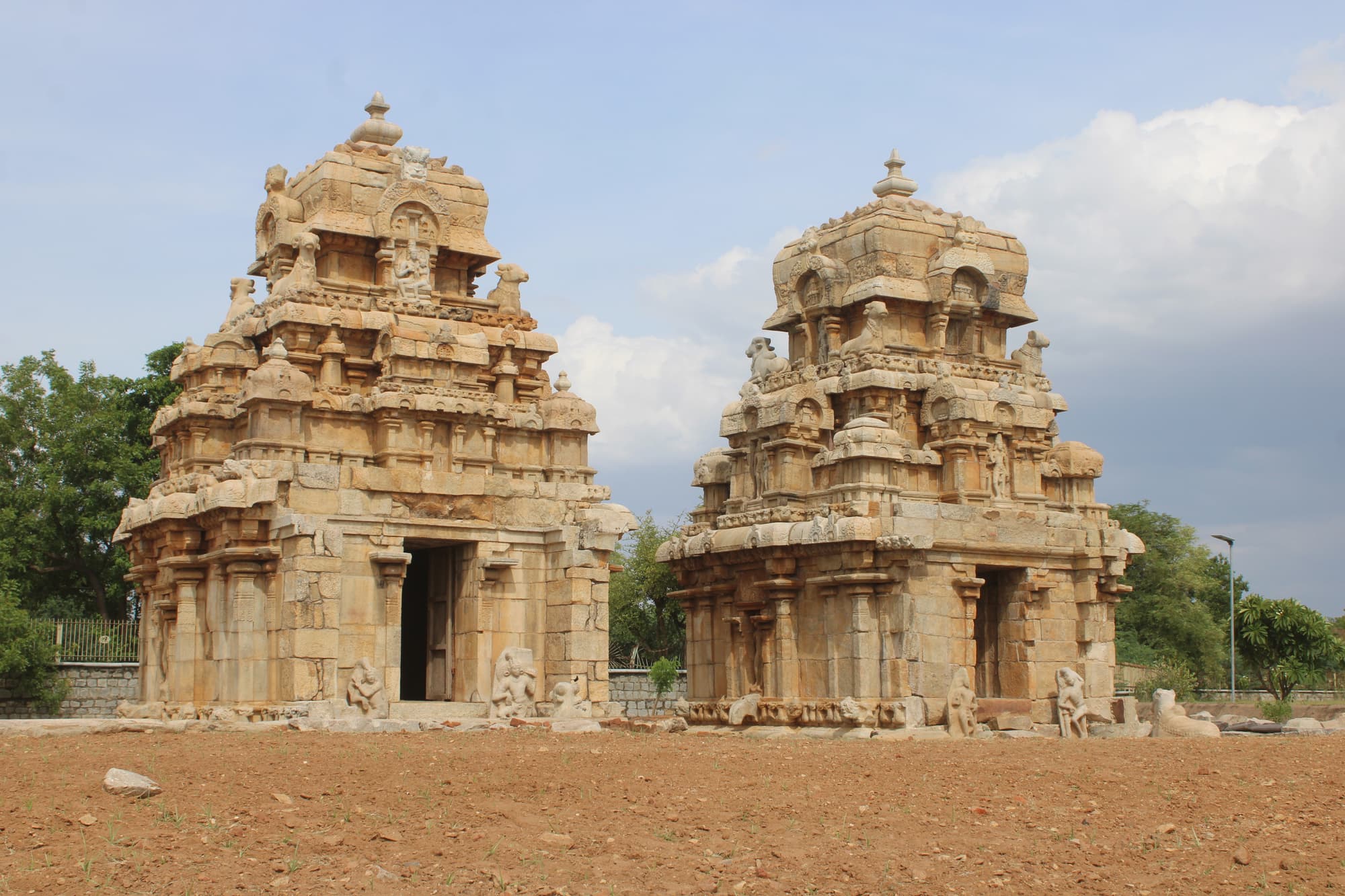
Muvar Koil
Kodumbalur, Tamil Nadu
Place of Worship<p>The site derives its name from the Tamil phrase for "The Three temples." This temple-complex originally consisted of three identical shrines built in a row all facing west. In front of the trio, was a maha-mandapa, a vrsha-mandapa and a gopura and surrounding the main shrines are sixteen shrines for the subsidiary deities. Of these, the central and the southern shrines are preserved in full and rest of the structures along with the enclosing boundary wall are preserved only on plan. A Sanskrit inscription on the central vimana clearly asserts that Bhuti Vikramakesari, an Irukkuvel chief built the three shrines. He named the central shrine after himself and the two flanking ones after his queens viz. Karrali and Varaguna.</p><p>The two surviving temples are both dedicated to Lord Shiva and feature an ardha mandapa (ante-chamber), and a garbha griha (sanctum sanctorum). The roof and columns of the ardha mandapa have collapsed.</p><p>The shikharas of the temples feature a cupola in typical Dravidian style. The spires are built on a square base of successively diminishing frames.</p><p>The walls feature carvings of gods (Uma maheshwara, Gangadhara, Kalari, Tripurantaka, and Gajantaka). Friezes with groups of devotees (gana) playing musical instruments and dancing are also seen. Makara Torana are seen above the niches.</p><p>A sanskrit inscription in grantha characters, seen on the southern wall of the central shrine gives the genealogy of nine generations of Irukkuvel chiefs of Kodambalur.</p>