
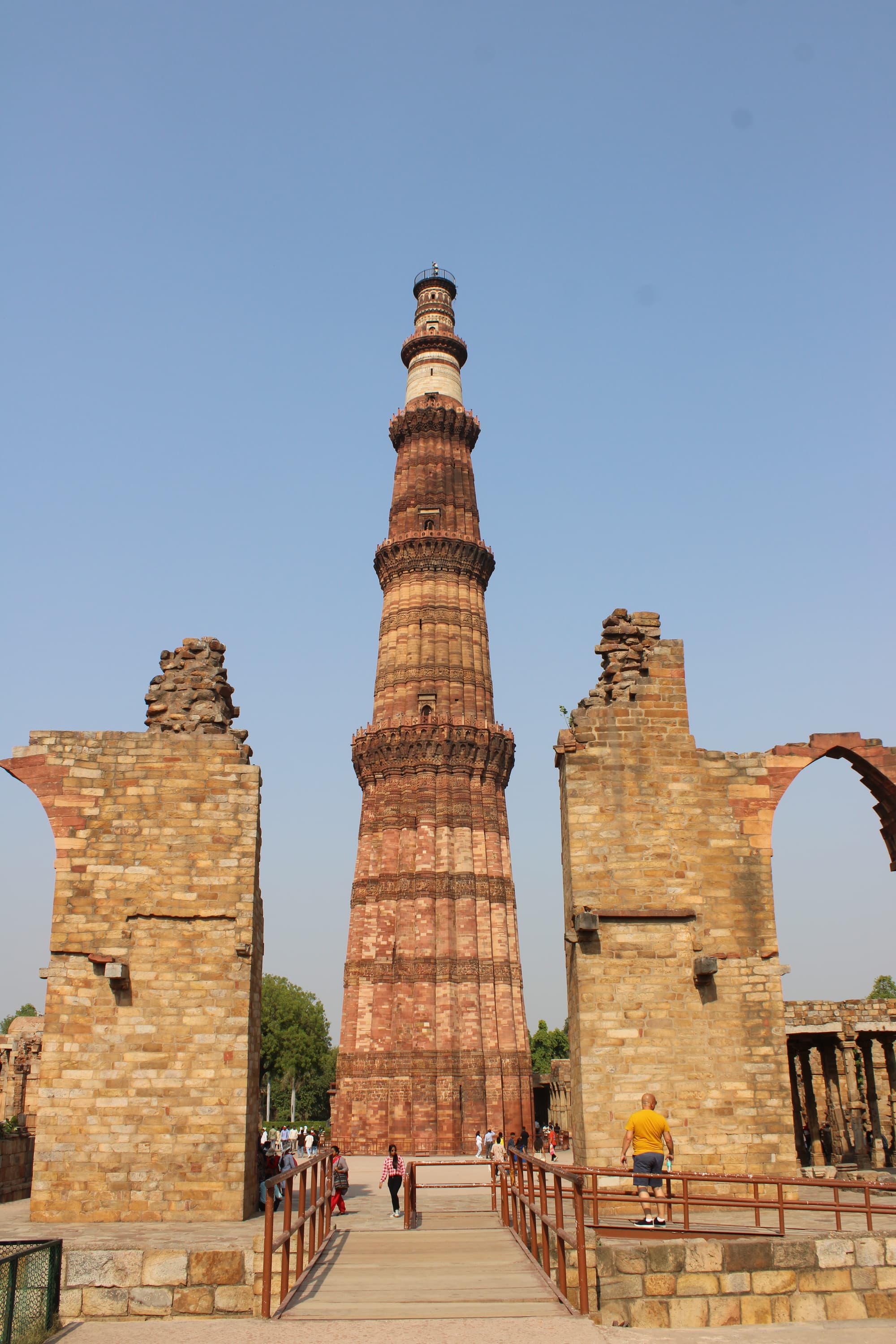
Qutub Minar
Mehrauli, Delhi, Delhi
Place of WorshipThe Qutub Minar is a tall tower which stands adjacent to the Quwwat-ul-Islam mosque in Mehrauli, near Delhi. It was constructed between 1199 CE and 1203 CE, during the reign of Qutub-ud-din Aibak, and his successor Iltutmish. The 72.5m high tower tapers from a base of 14.32m to 2.75m at the top. It has five landings. There are 379 steps from the bottom to the top. <br><br> The Qutb Minar consists of five stories. The first three are made of of red and grey sandstone, and have a fluted surface, while the upper stories are made in marble and have a smooth surface. <br><br> A number of other interesting structures stand in the vicinity of the Qutub Minar. <br><br> The <b>Iron Pillar</b> that stands in the courtyard of the Qutub Complex is from the Gupta period (5th-6th century CE). It rises to a height of 7.21m, and has a diameter of 41cm at the base, tapering to 30cm at the top. 2m of the pillar are below the platform which has been built around it. <br> The pillar was originally made for a Vishnu temple, and it is understood that it originally had a figure of Garuda affixed on top. It was most probably cast in Udayagiri in modern day Madhya Pradesh and brought to the Delhi area by the Tomara king, Anangapala, in about 1050 AD. <br> There are several Sanskrit inscriptions on the pillar. The oldest inscription is about 2m above the platform, and refers to a temple of Vishnu for which the pillar was created during the reign of King Chandra. A later inscription refers to Anangapala as the founder of the city of Dehali. <br> The pillar was made using forge-welding technique, and is comprised largely of iron with traces of phosphorus, carbon, and other elements. The presence of phosphorus is understood to create a thin rust-protective iron hydrogen phosphate hydrate that coats the surface of the pillar. <br><br>