
Warangal Fort
Warangal, Telangana
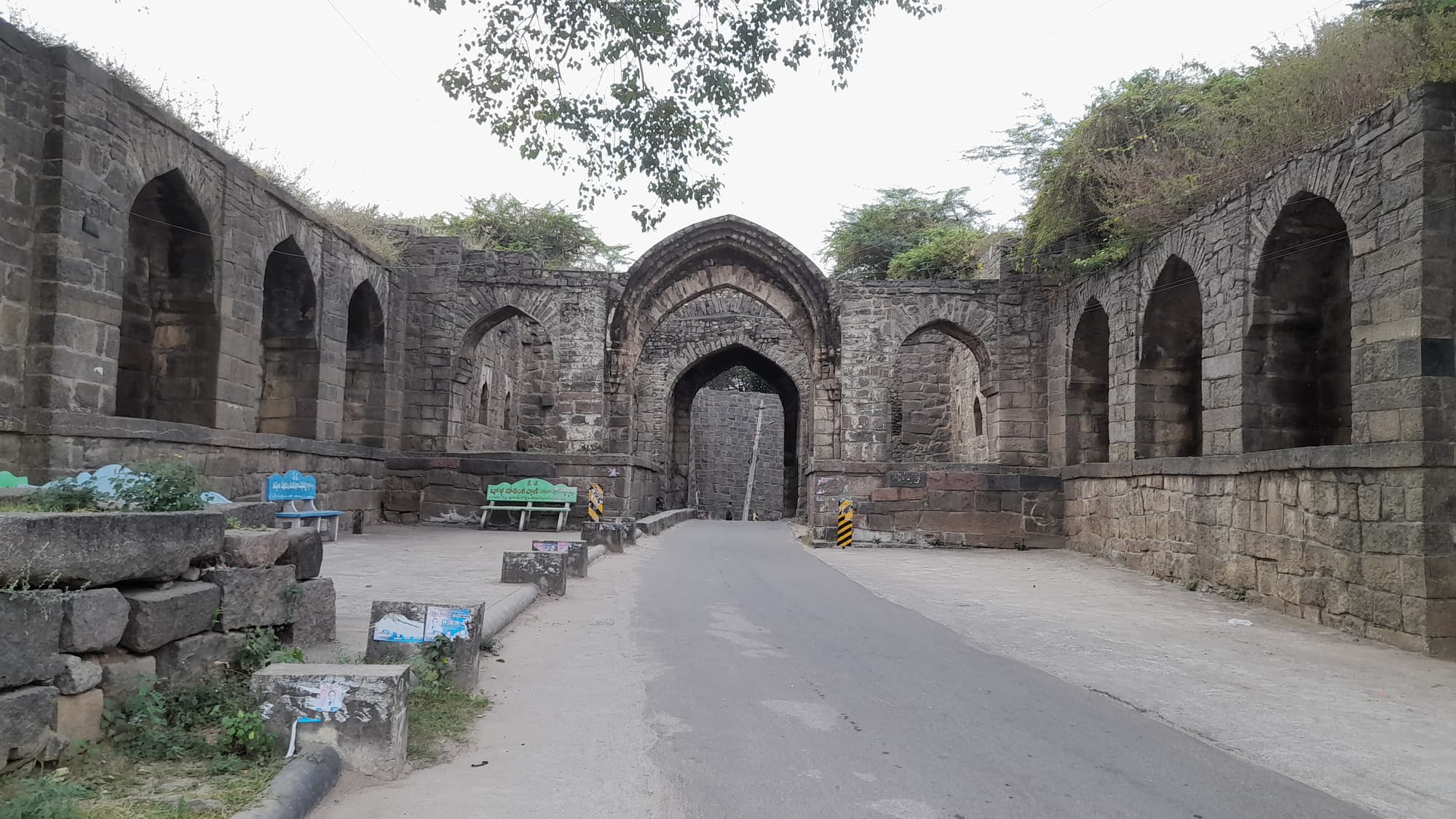
Historical MonumentsWarangal was the capital city of Kakatiya dynasty and the Musunuri Nayakas. The fort, which stands in the south eastern quarter of Warangal city, appears to have existed since at least the 12th century. Warangal Fort is laid out in three concentric circular walls with defensive fortifications - of 1.2, 2.4, and 12.5km in diameter. The innermost wall is made of massive granite blocks, laid in close-knit pattern without the use of mortar. This inner fort has four gates in the cardinal directions. <br> The wall has been fortified with 45 large rectangular bastions, which measure 12–18 m on a side. There are also 18 stone steps laid over a gradual slope built on the inner side of the wall, providing an access to the ramparts. <br><br> The central part of the fort has been identified as the archaeological zone where the ruins of a great Shiva temple are now seen with only the freestanding "Toranas" or gates on the four sides. These gates consist of four impressively carved, massive pillars each of which carved out of a single stone, topped by a lintel. Peacock carvings are seen on top of the lintels of these <i>toranas</i>. The gates have extensive intricate carvings of lotus buds, garlands, mythical animals, and birds. <br><br> The <b>Swayambhusva Shiva temple</b> which stood in this complex has been completely destroyed. Wall slabs, brackets and ceiling panels which are remnants of the temple are now exhibited in the park. The principal stone used in the making of the temple was black basalt. A sanctum has been reconstructed on the western side of the park, with two images of four-armed Shiva flanking the entrance, and a representation of dancing Shiva (Nataraja) as the center-piece of the lintel. One can see beautifully carved idols of a dancing Ganesha, Shiva, Durga, Vishnu, and a large Nandi figure in the characteristic Kakatiya style among the remnants of the temple. <br> One can see pillar brackets with the <i>gaja-kesari</i> motif, which depicts a warrior woman with a dagger and shield, riding a lion on top of an elephant. It is understood that this represents Queen Rudramma Devi. <br> An elegant, but damaged, statue of Shiva stands in the yard, with detailed clothing and ornamentation, a prominent third eye on the forehead, and locks of curls representing the swirling Ganga on the head of Shiva. <br> The temple remnants also display the characteristic lathed Kakatiya pillars and lintels with elaborate decorations featuring floral patterns, garlands, dancing women, musicians, stylized elephants, and themes from everyday life. Lion corbels are a prominent feature of the temple. <br> A Rama temple stands on the southern side of the complex. <br><br> The <b>Khush Mahal</b>, also known as the Shitab Khan Mahal, stands about 150m to the west of the archaeological area. It is a public hall built in the 14th century by the Delhi Sultans. The mahal is rectangular in shape and has sloping walls. It has six arched openings on each of its sides. There was once a timber roof over this mahal, supported by five transverse arches built of stone. There are approach steps on the northeast corner that provide access to the top of the structure. <br><br> The <b>Ekashila Temple</b> stands in a large water tank on the south of the archaeological park. There is a distinctive natural rock formation that protrudes above the water surface. The Ekashila temple has been built over this rock. <br><br> The <b>Jangamayya Temple</b> is a 12th-century Kakatiya Shiva temple situated to the south-west of the archaeological complex. It is also known as the Sri Rudreswara Temple. The architectural style of the temple reflects typical Kakatiya features including decorated lathed pillars, a sabha mandapam open on all sides with a raised disc floor, outer walls with miniature shrines and pilasters, and ornate lintels. The temple was restored by the Archaeological Survey of India. <br><br> There are many inscriptions on the ruins of the wall of the main temple recording the gift of a Kakatiya king, on pillars, on a stone outside the fort, and at many more places.